Part of Team Tipton’s Professional Development Toolkit.

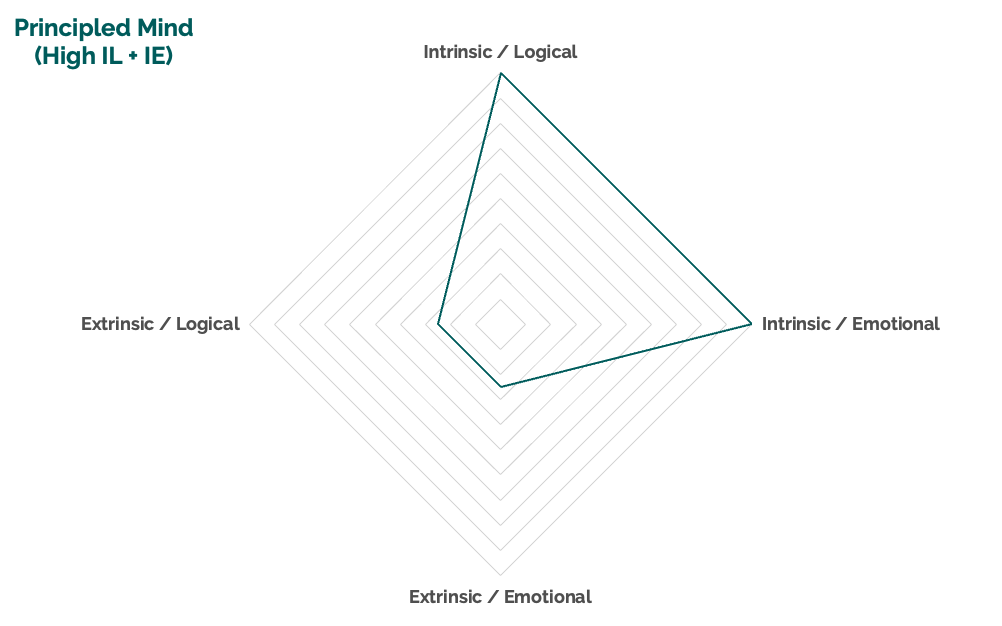
Your Preferred Communication Style: “Principled Mind”

Summary:

You process communication by looking inward—balancing logical reasoning with personal emotional resonance. You combine analysis with authenticity, aligning with your values. Others may see you as principled and self-assured, though possibly less adaptive to external structures or group dynamics.

Focus Areas:

Self-reflection, principles, internal balance of head + heart.

Supportive Ideas:

  1. Reflect on times when you might not have listened to others.
  2. Request feedback related to the effectiveness of your communications.
  3. Observe situations where others noticed something that you missed.
  4. Seek areas where group consensus and/or external data are critical.

Your results are similar to this graphic, but not exactly the same. We’d love to share your personalized results with you when you choose one of the four offerings we share below.

Considerations:

Strengths in Interaction:

“Watch-Outs”:

Opportunities:

Your Expectations:

Blends logic with values.

Less group-adaptive — may be perceived as an outsider, aloof.

Strengthen outward adaptability — seek scenarios where group consensus or external data guides decisions.

You expect others to understand and adapt communication to match your values and ways of thinking.

Next Steps = Learn More and Apply Your Results

Personalized Workbook

(plans, goals, measures):

Amplify Strengths. Communicate with Clarity.

  • Strengthen Your Impact: Learn practical strategies to communicate with clarity, confidence, and empathy across diverse settings.
  • Grow with Intention: Build daily habits and long-term goals that turn your communication tendencies into leadership superpowers.

2-Person Composite Report

(co-workers, partners, spouses):

Bridging Minds to Power-Up Understanding.

  • Understand Each Other’s Core Strengths: e.g., explore how precision and depth might complement adaptability and emotional intelligence.
  • Spot Natural Tension Points: Identify where different pacing, decision styles, or communication preferences may lead to friction — and how to navigate them skillfully.
  • Activate Synergy: Learn tailored strategies to align logic with flexibility, turning two distinct communication styles into a high-functioning partnership.

Fully Customized Team Composite Report

(for teams up to 12 individuals):

Same benefits as #2 above but for entire teams.

  • Executive leadership teams, management teams, project teams, boards of directors, city/county councils, etc.

The Art of Five-Star Communications

(for anyone):

Online or In-Person Workshops and/or Courseware.

“The Art of Five-Star Communications” will give you concrete insights and tools related to all 16 communications styles (e.g., rule checkers, rational architects, balanced strategists, etc.) and how you can become more effective in your communications with them.

Learning Objectives:

  • Make messages resonate, stick, and mobilize action.
  • Balance clarity and empathy, adapting your message for different audiences without diluting your intent.
  • Effective listening is the foundation of exceptional communication—and how to do it actively and visibly.
  • Practical techniques to avoid common leadership communication pitfalls like ambiguity, over-complication, or unintentional misalignment.